Phantasmagoric Logic
A Practical Guide to Paranormal Containment
Henosis Mysterium
6/16/20266 min read

Introduction: The Authority of Interpretation
Paranormal experiences possess a unique power. They arrive without invitation, disrupt ordinary perception, and leave behind questions that refuse to settle. A sound echoes through an empty house. A figure appears in the corner of a room. A presence settles over a space with such intensity that the body reacts before the mind can form an explanation.
Most people immediately begin searching for answers. They search for proof. They search for witnesses. They search for explanations capable of restoring certainty.
Yet certainty rarely arrives. The experience expands instead. New questions emerge. New interpretations appear. The encounter begins occupying more psychological territory than the event itself.
This is where Phantasmagoric Logic begins.
Phantasmagoric Logic is a framework of containment. Its purpose is not to determine what an experience ultimately is. Its purpose is to prevent the experience from acquiring authority over the observer.
The first law is simple:
The experience does not hold authority. Your interpretation does.
Fear grants authority to the phenomenon. Interpretation returns authority to the observer.
Containment begins the moment attention shifts away from chasing certainty and toward understanding structure. Every encounter contains information. Every symbol carries meaning. Every pattern points toward a psychological, emotional, or archetypal process seeking recognition.
The observer's task is interpretation.
The observer's task is sovereignty.
The Problem: Mental Friction
The psyche possesses an extraordinary capacity for adaptation. It continuously organizes emotion, memory, perception, and experience into a coherent story capable of sustaining everyday life. Occasionally, intensity exceeds that capacity.
A profound loss.
Unresolved trauma.
Persistent anxiety.
Emotional overload.
Periods of isolation.
A major life transition.
When sufficient pressure accumulates without integration, the psyche begins seeking alternative methods of expression. Emotional material that remains unresolved starts pushing toward consciousness through symbolic channels.
The result is what we call Mental Friction.
Mental Friction occurs when consciousness spends increasing amounts of energy attempting to organize material that has not yet found a coherent form. Attention narrows. Hypervigilance increases. Pattern recognition accelerates. Ordinary events acquire unusual significance. Exhaustion follows.
The psyche attempts to relieve this pressure through projection.
Projection externalizes internal material into the perceptual field. What remains unresolved internally begins appearing externally through image, sensation, narrative, and symbol. This process frequently manifests as experiences that many people describe as paranormal.
Sounds emerge without obvious origins. Movement appears at the edge of perception. A powerful sense of presence settles over a room. Coincidences begin clustering into seemingly meaningful sequences.
The experience feels external because the psyche has successfully translated psychological material into perceptual experience. The encounter becomes visible. The underlying pattern remains hidden.
The Mechanics of Projection
Projection requires a canvas. The psyche rarely generates symbolic content in a vacuum; it utilizes existing environmental conditions and organizes them into meaningful forms. Certain locations naturally support this process:
Doorways & Hallways
Staircases & Mirrors
Windows & Threshold spaces
These environments occupy a unique position between one state and another. Their physical structure mirrors psychological transition. The symbolism is immediate and instinctive. Human beings have associated thresholds with transformation, uncertainty, and emergence for thousands of years. The psyche recognizes this relationship automatically.
Acoustic conditions function in a similar manner. Oppressive silence creates an unusual degree of inward attention. High reverberation introduces ambiguity into ordinary sound. The mind responds by seeking organization and meaning.
Projection emerges where ambiguity and emotional intensity intersect. This is why paranormal experiences frequently appear during periods of uncertainty, grief, transition, exhaustion, or heightened emotional activation.
The psyche utilizes available materials. The environment becomes a stage. The symbol enters the scene.
The Language of the Visual Field
Every recurring form carries information. The psyche speaks through symbols long before it speaks through language. Certain patterns appear repeatedly because they correspond to universal structures within human experience.
Projection rarely appears as random imagery. The psyche organizes emotional material through recurring symbolic structures. These structures appear across cultures, mythologies, dreams, and paranormal reports because they emerge from the same psychological architecture.
The Shadow: Predatory figures frequently signal confrontation with repressed fear or unresolved conflict. Jung referred to this territory as the Shadow. The figure carries the emotional charge of material that has been denied, avoided, or pushed outside conscious awareness.
The Persona Distortion: Mimics, doubles, and distorted reflections often emerge during periods of identity instability. The familiar face appears altered because the relationship between the individual and their social mask has begun shifting beneath awareness.
The Trickster: Appears through absurdity, misplaced objects, impossible timing, routine disruptions, and bizarre coincidence. Its purpose is disruption. Psychological rigidity softens under its influence. Certainty loosens. New possibilities emerge.
The body participates in this language as well. A tightening sensation in the stomach. Pressure in the chest. Activation along the neck and shoulders. Sudden waves of unease. The sensation of being watched.
These responses frequently occur before conscious interpretation develops. The nervous system detects significance first. Meaning arrives later.
The body functions as a navigational instrument. A Somatic GPS. Every sensation contains information. Every reaction contains a clue.
The task is observation.
Threshold Six: The Dark Night of Interpretation
Most people assume the greatest danger exists during the encounter itself. The greater danger often emerges afterward.
An experience occurs. The event passes. The search begins.
Research intensifies. Forums multiply. Videos accumulate. Books stack beside the bed. Every coincidence appears meaningful. Every symbol appears connected. Every unanswered question generates three more.
The encounter gradually loses importance.
The pursuit of certainty becomes the primary experience.
This is Threshold Six: The Dark Night of Interpretation.
At this threshold, the observer becomes trapped inside the search for a final answer. Life begins organizing itself around the mystery. Attention narrows. Relationships suffer. Sleep suffers. Psychological energy becomes consumed by an endless effort to resolve uncertainty.
The psyche enters a recursive loop. Meaning chases meaning. Questions chase questions. The search becomes self-perpetuating. Many individuals remain at this threshold for years.
The original question fades into the background. The search acquires its own momentum. New theories emerge. Old conclusions collapse. Attention becomes fixed on solving the mystery.
The phenomenon no longer occupies the center of the experience.
The pursuit does.
Containment requires a different orientation:
Structure creates stability.
Observation creates clarity.
Integration creates resolution.
The objective is understanding. The objective is sovereignty. The objective is returning authority to the observer.
The Archivist's Descent
Every significant encounter follows a recognizable progression: Recognition, Activation, Projection, Interpretation, Integration. The Archivist's Descent provides a structured method for engaging symbolic material consciously.
This practice is built on four distinct pillars:
Preparation: Select a physical anchor. A key, stone, ring, watch, or other object associated with ordinary reality works well. Hold the object and establish your position clearly:
"I am the observer. I enter this by choice. No symbol, projection, autonomous complex, or emergent experience holds authority over me."Descent: Create conditions that encourage symbolic emergence. Rhythmic breathing, candlelight, natural patterns, static noise, wood grain, or ink blots all provide suitable ambiguity for projection. Observe. Allow images, impressions, emotions, and associations to arise. Avoid analysis. Avoid interpretation.
Documentation: Document everything. Record colors, sounds, sensations, locations within the body, emotional shifts, environmental conditions, and symbolic content exactly as they appear. This is called the Cold Log. The purpose is observation without contamination. Interpretation occurs later.
Reintegration: When the session concludes, physically change environments. Move to another room. Touch the anchor object. Drink water. Re-establish ordinary orientation. Only then should analysis begin.
The observer remains separate from the material. Containment remains intact.
Threshold Seven: Sovereignty and Gnosis
Every encounter asks a question. Integration provides the answer.
Threshold Seven represents stabilization. The experience settles into understanding. Psychological energy returns to conscious control. The pattern becomes visible.
The individual who reaches this stage no longer measures growth by the intensity of the encounter. Growth becomes visible through behavior:
Stronger boundaries.
Greater self-trust.
Increased emotional resilience.
Reduced fear.
Expanded awareness.
The encounter ceases functioning as a disruption and begins functioning as information. This is gnosis in its practical form. Direct understanding. Lived understanding. Integrated understanding.
The symbol delivers its message. The observer receives it. The psyche settles.
Conclusion
Fear expands patterns. Understanding organizes patterns. Containment stabilizes patterns.
Experiences repeat because unresolved material continues seeking recognition. The pattern repeats until it has been acknowledged, interpreted, and integrated.
Every encounter contains information. Every symbol contains a pattern. Every pattern points toward greater self-knowledge.
The observer remains the final authority. Always.
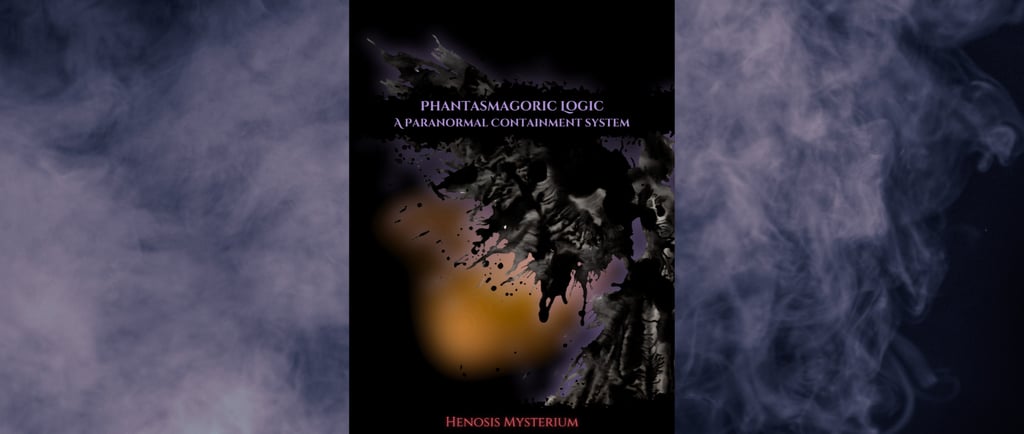
For some readers, understanding the framework is enough. Others feel compelled to map the terrain more deeply. For those pursuing long-term psychological sovereignty, the complete Phantasmagoric Logic system expands the work introduced here.
The encounter is only the beginning.
Interpretation creates understanding.
Understanding creates sovereignty.
Sovereignty creates freedom.
The 41 Page Phantasmagoric Logic Guide: Full system documentation for deep-field containment and threshold tracking.
The Chapterized Audiobook: A complete, chapterized narration of the text.
The 7 Chart Pack: Technical diagnostic tools for precise archetypal mapping and somatic monitoring.
